
What Your Attention Lets In
Attention is not a floodlight that shows you the world. It is a narrow door, and a great deal of a life is decided by what gets through it.
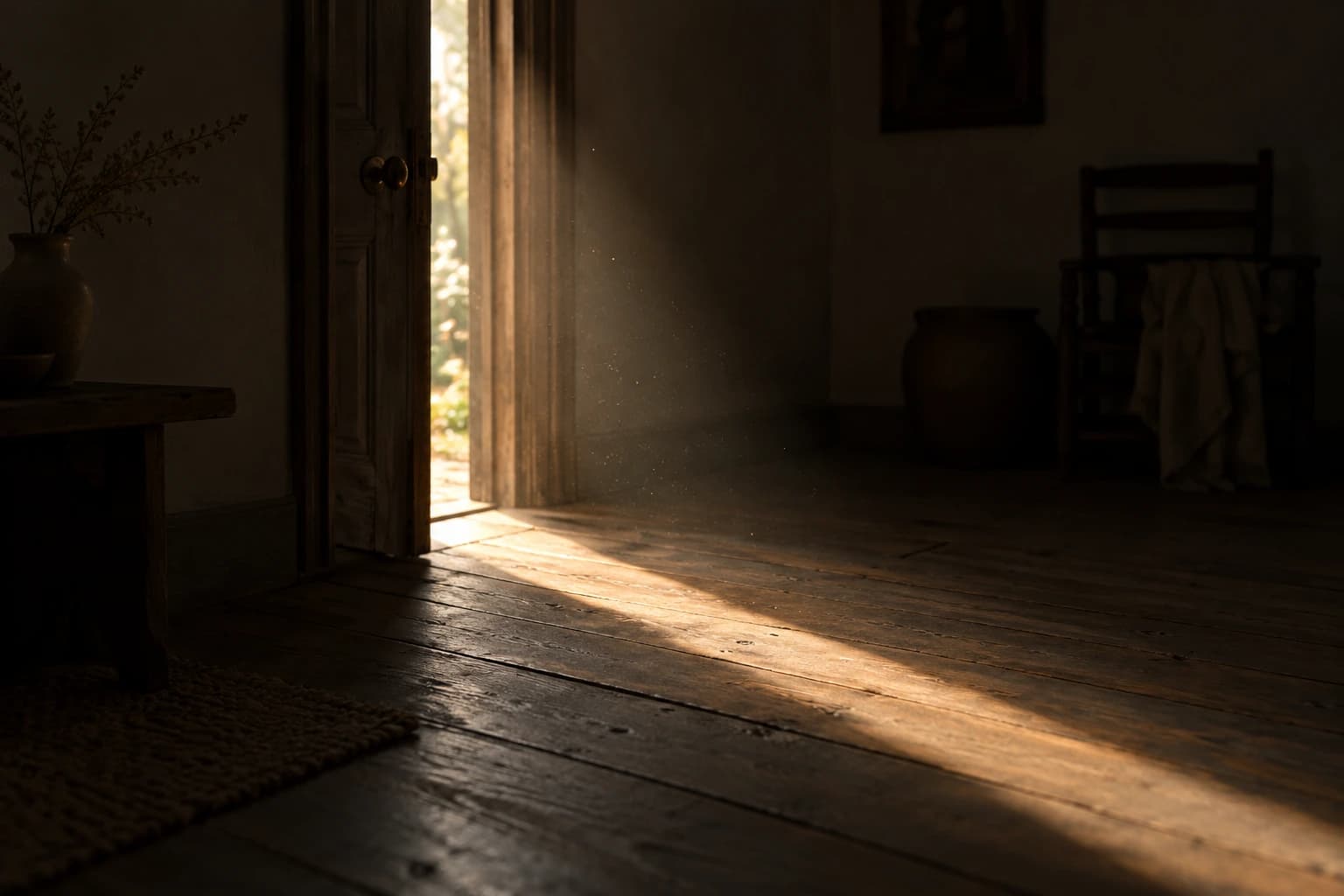
Right now, as you read, there is a background you had filtered out. The feeling of your feet. The temperature of the room. Small sounds. A pressure somewhere in your body that has been there for minutes and only now, because it has been pointed at, arrives in your awareness. It was always sending. You were not admitting it.
Attention is not a floodlight that shows you the world. It is a narrow door, and a set of fast processes decides what passes through it. Writing in 1890, William James put it with unusual clarity. My experience is what I agree to attend to, he wrote. Only those items which I notice shape my mind; without selective interest, experience is an utter chaos. He was one of the foundational figures of modern psychology, and he was not making a mystical claim. Your conscious experience is not a complete representation of the world. It is shaped by the limited portion that attention makes available. Two people can stand on the same street, in the same minute, and live in different cities.
Broadly, two forces decide who gets through, and learning to tell them apart is the beginning of the skill. The first is a pull from outside: the loud, the sudden, the moving, the threatening. A door slams and your attention moves there before you consent. That involuntary capture serves an obvious protective function, even when the interruption turns out to be harmless. The second force is quieter and points the other way, a reach from inside: what you are looking for. When you are hungry in a strange town, restaurants seem to line every street. The restaurants were always there. Your aim pulled them through the door.
Most ordinary days are dominated by the first force, attention captured from outside by novelty, urgency, threat, and notifications engineered by clever people to stand at your door and shout. The second force, the reach from inside, is the part that can be trained, and few people are ever taught to observe it.
I have been fooled by it myself. Years ago a photograph decided that a particular phone should be mine, and within weeks that phone was on every hoarding in Colombo, in every shop window, in every conversation I walked into. The phones had not multiplied. My gatekeeper had been handed a new instruction and had begun admitting what it used to turn away. For a long time I read the change as the world arranging itself around me. It was closer to home than that. Less magical, and far more useful once I understood it.
This is also where the honest limit sits. Aiming attention changes what you notice, not what exists. It will not make you see what is not there, and it will not overcome a world that has genuinely closed a door. No amount of noticing produces work in a town with no work. Attention also tires and competes; on a day already full of worry there is less of it to aim, which is a fact about a finite mind rather than a moral failing.
A week of watching will show you the gate. Once a day, stop and ask a plain question: what has my attention been admitting today, and what pulled it there? Not to fix it. To see it. Notice how much of the day's inner content arrived because something outside was loud, and how little arrived because you aimed. Notice, if you can, one thing that was present the whole time and only reached you late: the ache in your shoulder, the mood of someone near you, the sky. Most people never pause to watch their own attention being spent, the way you might watch money leave an account. That watching is the whole of it.
Prefer to go deeper?
This idea is worked through in full in Before You Want, alongside the rest of the cycle and a ninety-day practice.